Pellet Die
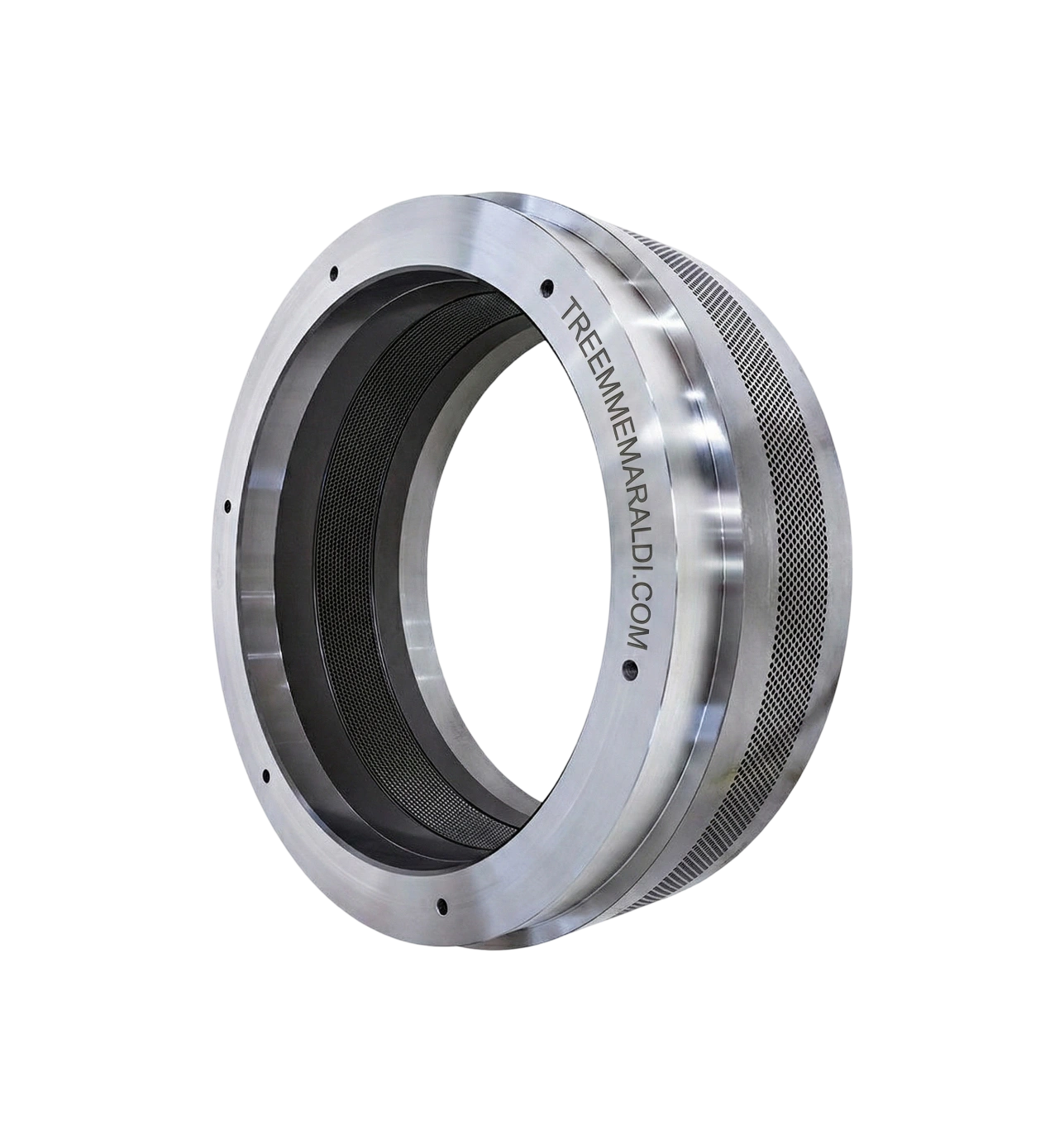
We specialize in the production and repair of pellet mill dies, putting our expertise at the service of the wood, biomass, and feed industries. We provide custom-made dies for every production need, ensuring full compatibility with all major pellet press brands on the market.
What is a pellet die and what does it do
The die (sometimes also called a “matrix”) is the key component of every pellet mill: it is the element through which the material is compressed and extruded to form the pellet. It consists of a ring or a perforated disc, made of special high-strength steels, which rotates in contact with the press rollers. The material, pushed through the calibrated holes, takes on the characteristic cylindrical shape of the pellet.
Choosing the right die directly affects three critical production factors: hourly plant output, energy consumption, and final pellet quality. A die unsuitable for the material being processed, or with incorrectly sized holes, can cause overheating, premature wear, increased costs, and poor-quality pellets.
Types of pellet mill dies
Ring die
The ring die is the most common configuration in high-capacity industrial presses. The material is compressed between the rollers and the inner surface of the ring, coming out through the radial holes. This design ensures continuous production, high efficiency, and uniform pressure distribution across the entire surface, reducing localized wear points.
Flat die
Flat dies are used on small to medium capacity presses, often in artisanal settings or for specific productions. They consist of a perforated disc on which the rollers act from the top side: the material passes vertically through the holes and is cut at the outlet. They are valued for their simple construction and ease of replacement.
Die for wood and biomass pellets
Designed specifically for processing woody biomass, wood chips, sawdust, and agricultural residues, these dies are made of alloy steels subjected to quenching and tempering heat treatments. The goal is maximum resistance to abrasion — the main cause of wear when processing fibrous materials sometimes contaminated with foreign bodies such as sand or small stones.
Feed pellet die
In the feed industry, dies must guarantee not only mechanical strength but also absolute dimensional precision. The diameter and length of the holes determine the compactness and digestibility of the pellet. Our food-grade steels comply with hygienic and sanitary regulations and ensure a uniform product, without crumbling and with the right consistency.
Materials and technical specifications
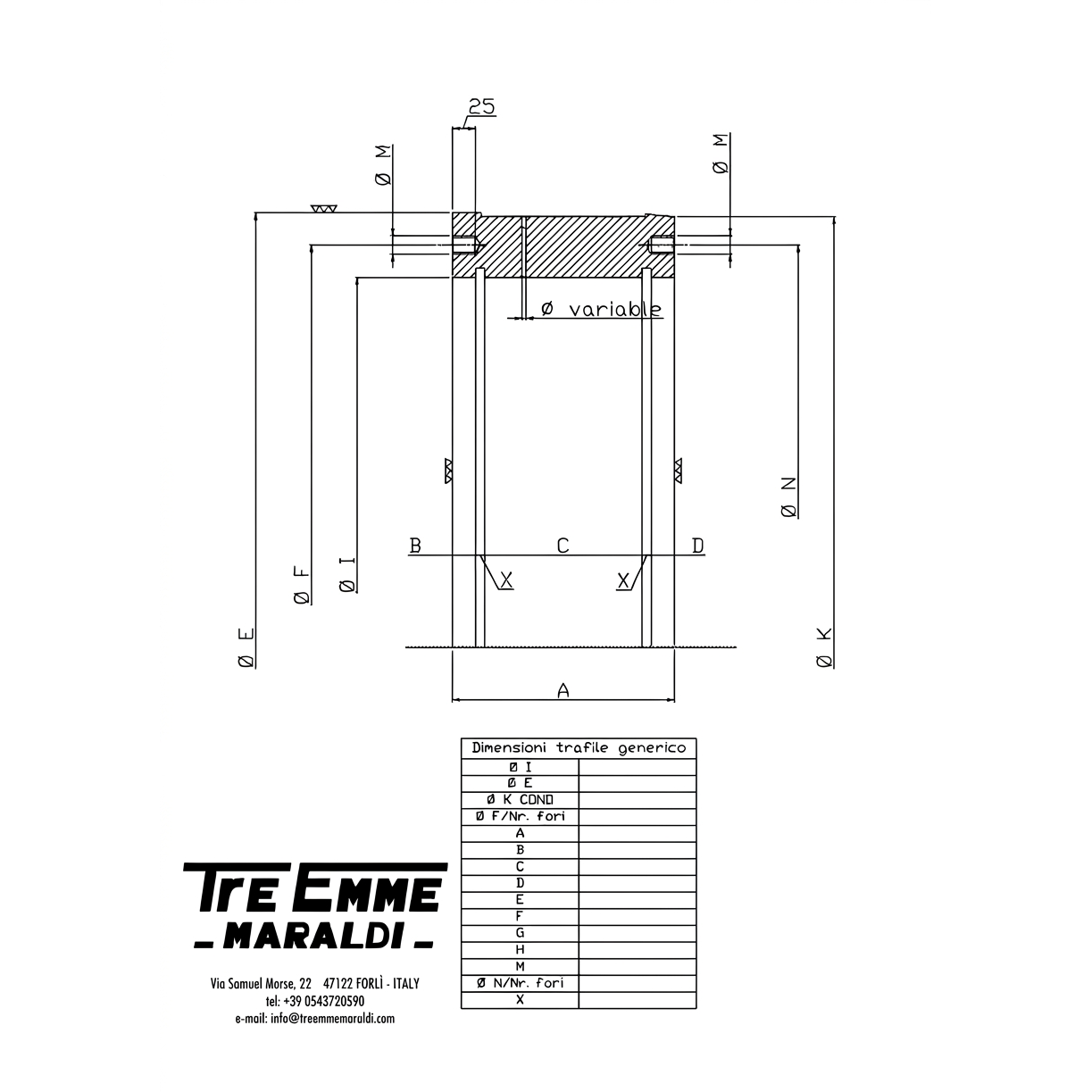
The quality of a die depends on the choice of materials and the heat treatments applied. We exclusively use high-strength alloy steels, selected based on the type of material to be pelletized and the operating conditions of the press.
- Chromium-molybdenum steels: ideal for biomass and wood, they offer excellent wear resistance and toughness even at high temperatures.
- Stainless steels: suitable for the feed and food industry, they guarantee corrosion resistance and full hygienic compliance.
- Case hardening and surface quenching: increase the hardness of the working surface while maintaining a tough core, significantly extending the die’s service life.
- Precision CNC machining: each hole is calibrated to the hundredth of a millimeter. The hole geometry (tapered, cylindrical, countersunk) is designed to optimize material flow.
Compatibility and customization
We produce custom-made dies compatible with all major pellet press brands, both European and non-European: CPM, Andritz, Münch, La Meccanica, Bühler, General Dies, Promill, and many others. We work from customer drawings or internally develop the most suitable geometry, adapting outer diameter, thickness, number, and arrangement of holes to the specifications of your press and material.
Custom production includes:
- Hole diameter from 2 mm to 12 mm (or larger on request)
- Adjustable compression ratio based on the material
- Cylindrical or tapered holes
- Inlet countersink optimized for fibrous or floury materials
How to choose the right die
The choice of die directly affects plant performance and final product quality. Here are the key parameters to consider:
- Hole diameter: determines the pellet diameter. It must be chosen based on the type of final product and market requirements (e.g., 6 mm pellets for household stoves, 8-10 mm for industrial use).
- Type of material to pelletize: hardwood, softwood, blend, feed, biomass — each material has different abrasiveness and flowability, requiring specific steel properties and hole geometries.
- Die thickness and compression ratio: the thicker the ring, the longer the hole channel, the greater the compression. An incorrect ratio causes overheating or friable pellets.
- Hourly production capacity: the number of holes and the effective die surface must be proportional to the press capacity.
- Operating conditions: raw material moisture, operating temperature, and presence of contaminants influence the choice of heat treatment and steel type.
Maintenance, wear, and when to replace a die
The service life of a die depends on many factors: abrasiveness of the processed material, hours of operation, steel quality, and proper maintenance. Under normal conditions, a quality die can produce between 500 and 2,500 tons of pellets before requiring replacement.
Signs that indicate the need for replacement:
- Increased power consumption at the same production rate
- Reduction in hourly output
- Pellets with rough, cracked, or irregular surface
- Abnormal overheating of the compression chamber
- Ovalized holes or holes with evident signs of wear at the inlet
We also offer a restoration and refurbishment service for used dies: we assess the state of wear and, where possible, intervene with grinding and re-drilling, extending the component’s life and reducing costs for the customer.
Frequently Asked Questions
Which pellet press brands are your dies compatible with?
All major European and non-European brands: CPM, Andritz, Münch, La Meccanica, Bühler, General Dies, Promill, and many others. We work from customer drawings or develop the geometry internally, adapting outer diameter, thickness, and hole layout to your press and material.
What steels and heat treatments do you use for pellet dies?
Chromium-molybdenum alloy steels for wood and biomass, and stainless steels for the feed and food industry, with case hardening and surface quenching. Every hole is calibrated to a hundredth of a millimeter with precision CNC machining.
Do you repair or recondition used pellet dies?
Yes. We assess the state of wear and, where possible, re-grind and re-drill the die, extending its service life and reducing costs compared with a new die.
How long does a pellet die last on average?
It depends on the material being processed: under normal conditions, a quality die produces 500 to 2,500 tons of pellets. Softwood can exceed 2,000 tons, while abrasive biomass and hardwood shorten the lifespan.
How do I know when a pellet die needs replacing?
Main signs: higher power consumption at the same output, lower hourly yield, rough or cracked pellets, abnormal overheating of the compression chamber, and ovalized or worn holes at the inlet.
How do you choose the hole diameter?
It depends on the target market for the pellet. In Europe, 6 mm is the standard for household stoves, while 8-10 mm pellets are used for industrial boilers. In the feed industry, diameters range from 2 to 6 mm depending on the animal species and growth stage.
Can I use the same die for wood and feed?
No. Hygienic requirements, steel characteristics, and hole geometries are completely different. Using the wrong die can contaminate the product or cause premature failures.
Do you supply dies for out-of-production press models?
Yes. We work from drawings and can reproduce dies for any press model, even out of production, manufacturing the component to the same specifications or improving it with more modern materials and treatments.
How can I request a quote or technical advice?
Contact our office in Forlì, Italy: write to info@treemmemaraldi.com or call +39 0543 720590. Our team will assess your press and the material to be pelletized and prepare a tailor-made quote.